
After Grenfell, isn't it time to take property management seriously?
- Jun 26, 2017
- 4 min read
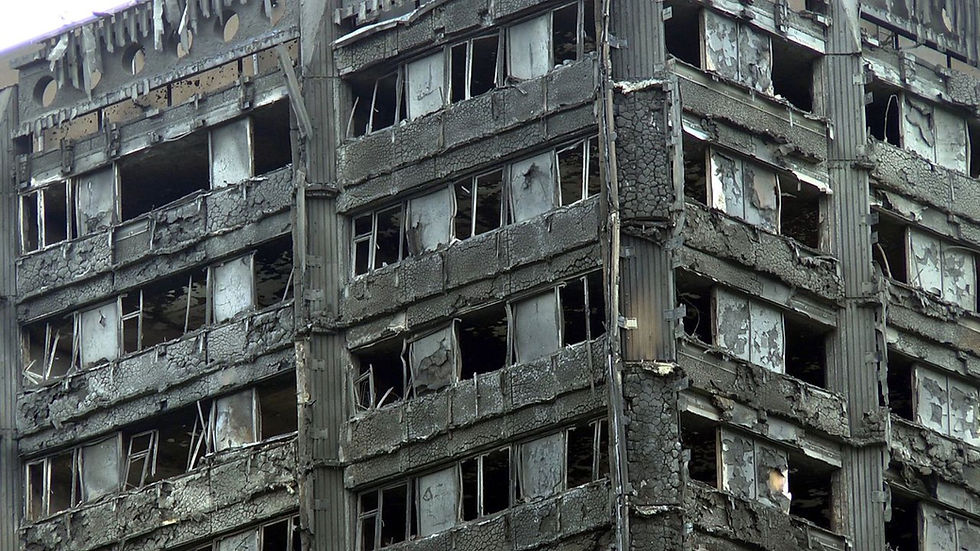
The horrific tragedy in Grenfell Tower has caused people to ask “how could this happen?”, “who is responsible?” and “can we stop it happening again?” As Grenfell is now a crime scene, the answer to these questions will no doubt emerge in time.
For too long, the importance of property management has been downplayed or simply ignored. Yet, after developers complete a tower and move on to the next, it is actually the property manager who is left running the building day-to-day for years to come.
Most people pay little regard to how the mundane banality of daily building management gets done - cleaning of the communal areas, emptying the bins, mowing the lawn, arranging the building insurance. However, it is the property manager who is looking after a residential apartment building day-to-day. For larger buildings or estates, there may be a whole team of people involved including estate managers, surveyors, lawyers and accountants in addition to all their contractors and suppliers. In addition to the daily maintenance, property managers are also responsible for both preventative and reactive maintenance programs. These involve more substantial maintenance and so high value major works will be carefully planned, tendered and organized.
Usually, the building residents and certainly the neighbor’s in the surrounding streets ignore the humdrum of property management unless it directly affects them - a noisy neighbor, an uncleaned window, an unexpected charge to pay. However, property management is far more than just helping the residents association choose the shade of magnolia paint for their communal hallway decorations. Property management has become an increasingly complex, multi-disciplinary sector in which to work. With an increasing amount of mechanical, engineering and technology in buildings today good property managers must be knowledgeable about the physical technicalities as well as all the latest legal, regulatory and insurance requirements.
It may shock readers that the Government do not know for sure how many flats there are in the UK. Indeed, for many years until 2014, it was thought there were just 2.5 million flats. With more flats being built than houses in recent years, those in the industry knew the Government were out of touch. It was only under pressure from those of us in the industry that the Government felt compelled to revise and increase this estimate to 4.5 million flats - but qualified this figure and limited it to private leasehold properties. Add in council and housing association properties too, and the figure is far larger. The Leasehold Knowledge Partnership, who helped compile the figures, estimate there are 1.9 million flats in the social sector too. Aside from an inability to authenticate the count, it has never been clear why the actual number of apartments has been artificially depressed. However, with at least 6 million homes or 25% of the housing stock in total, there are probably between 9-12 million voters in apartment accommodation.
In addition to the size of the market, readers may also be surprised to learn that property management in the UK is unregulated. Anyone can set-up shop as a property manager tomorrow - no qualifications or membership of industry bodies required. Yet, at the last count, there are an estimated 500,000 private sector apartments, paying half a million GBP in service charges in London alone. Applying this ratio nationally suggests there is £5 billion paid in service charges each year. Any other industry managing this amount of client money would be highly regulated - the legal and banking professions are just two examples.
Discussions about regulating property managers have been ongoing for decades. The Government have claimed they do not want to be “interventionist” with self-regulation preferable. The industry have claimed that self-regulation only affects the “good guys”, but the firms that really need to be regulated (or shut out of the industry) shun voluntary regulatory and so are beyond sanction. Despite the size and importance of the sector, there have never been more than a handful of civil servants looking at the leasehold property sector at any one time. Until recently, successive Housing Ministers have not seen apartment buildings as a priority. So, the status quo has persisted.
However, there may be changes on the horizon. The All Party Parliamentary Group (APPG) on Leasehold & Common hold Reform has recently been re-instated after many years of absence. One of its more active members, Jim Fitzpatrick MP, a former firefighter, was also Secretary of the APPG on Fire Safety & Rescue. In light of recent events, whether our lawmakers will look again at industry regulation remains to be seen.
Thankfully, tragedies like Grenfell do not happen often but fires in flats happen more regularly than you may think. You are at greater risk of experiencing a fire if you live in an apartment than another property type, with 25% of all domestic fires occurring in flats. However, property management is not just about fire safety but also the many other potential dangers presented by high-density, urban living including elevator, car park and structural safety. Unfortunately, fatalities resulting from people being trapped in lifts, the operation of automatic barriers and gates, masonry collapses and flooding illustrate some of the risks property managers are tasked with eliminating or mitigating. Too often, the fact that the property manager has done his or her job is taken for granted.
Everyone has a right to be safe in their homes. A good property manager will be taking care of the safety and security of the building and its occupiers. Residents may not always appreciate the reasons behind what appear to be petty “house rules”. However, after Grenfell, notices preventing BBQ’s on balconies or unapproved internal structural alterations may have greater resonance and understanding.
Sadly, it has taken a horrific tragedy to shine a light on the overlooked property management industry. Irrespective of whether any blame is attributed (or against whom), the important role all those in the property management sector have to play in looking after millions of homes across the country should now finally be acknowledged.


Comments